

Establish comprehensive compliance training protocols before operators and employees access any esport bet login systems, ensuring every stakeholder understands Brazil’s Law 14.790/2023 and Ministry of Finance regulations governing esports betting activities. This regulatory framework, implemented in 2024, mandates specific training requirements for operators, affiliates, and customer-facing personnel in this rapidly expanding market intersection.
Design role-specific training modules that address distinct compliance obligations: operators must understand licensing requirements, responsible gaming protocols, and anti-money laundering procedures; customer service teams need training on age verification, self-exclusion processes, and problem gambling identification; while marketing personnel require education on advertising restrictions and prohibited promotional tactics targeting minors or vulnerable populations.
Implement continuous assessment mechanisms that verify comprehension of data protection requirements under Brazil’s General Data Protection Law (LGPD) as it applies to player information, transaction records, and behavioral analytics common in esports betting platforms. Regular knowledge checks ensure personnel maintain current understanding of evolving regulatory interpretations from the Secretariat of Prizes and Betting.
Integrate scenario-based learning experiences that simulate real compliance challenges specific to Brazil’s esports betting environment: handling underage access attempts, identifying suspicious betting patterns on competitive gaming events, managing cross-border transaction compliance, and responding to regulatory audits. These practical applications bridge the gap between theoretical knowledge and operational reality.
Leverage microlearning delivery methods that accommodate the fast-paced nature of esports operations, providing just-in-time training updates as regulations evolve and new compliance requirements emerge in this nascent but rapidly maturing market segment.
Brazil’s eSports Betting Regulatory Framework: What Changed in 2024

Key Compliance Requirements for eSports Betting Operators
Operating eSports betting platforms in Brazil requires adherence to a comprehensive regulatory framework established by the Secretariat of Prizes and Betting (SPA) under Law 14.790/2023. Training programs must address five critical compliance pillars to ensure operational legitimacy.
Responsible gaming protocols form the foundation of ethical operations. Operators must implement self-exclusion mechanisms, deposit limits, and session time controls. Training should equip staff to recognize problem gambling indicators specific to eSports audiences, who skew younger and may exhibit different behavioral patterns than traditional sports bettors. This includes understanding how the fast-paced nature of eSports matches can accelerate compulsive betting behaviors.
Age verification systems must prevent minors from accessing betting platforms. Brazil mandates robust identity authentication at registration, requiring integration with national databases like CPF verification. Staff training should emphasize the legal consequences of compliance failures and the technical workflows for flagging suspicious accounts.
Anti-money laundering measures align with COAF (Council for Financial Activities Control) requirements. Employees need practical knowledge of transaction monitoring thresholds, customer due diligence procedures, and suspicious activity reporting protocols. The unique challenge in eSports involves recognizing unusual patterns in smaller-value, high-frequency bets common to this market.
Data protection compliance under Brazil’s General Data Protection Law (LGPD) demands strict handling of personal information. Training must cover consent management, data minimization principles, and breach notification procedures, particularly as eSports platforms often collect extensive behavioral analytics.
Advertising restrictions specifically target youth-oriented channels. Compliance training should outline prohibited marketing tactics on gaming streams, social media platforms popular with minors, and partnerships with eSports influencers. Understanding these boundaries prevents costly violations while maintaining legitimate market presence within Brazil’s evolving regulatory environment.
Penalties for Non-Compliance: Real Business Impact
Non-compliance with Brazil’s esports betting regulations carries substantial consequences that extend far beyond simple monetary fines. The Brazilian gaming authority can impose penalties reaching up to R$2 billion (approximately $400 million USD) for serious violations, with minimum fines starting at R$100,000 per infraction. These financial penalties are just the beginning of potential operational disruptions.
License suspension or permanent revocation represents the most severe consequence, effectively ending business operations in Brazil’s market. Recent enforcement actions demonstrate authorities’ willingness to act swiftly against operators lacking proper compliance frameworks. One international betting platform faced a three-month operational suspension in 2024 due to inadequate age verification protocols and insufficient staff training documentation.
The reputational damage often proves more costly than financial penalties. Media coverage of compliance failures erodes customer trust and impacts partner relationships. For corporate training professionals, these cases underscore why comprehensive, documented training programs are essential risk management tools. Inadequate employee preparation creates liability exposure across multiple regulatory touchpoints—from responsible gaming protocols to anti-money laundering requirements.
Organizations without structured compliance training face higher audit scrutiny, increased insurance premiums, and difficulty securing payment processing partnerships. The downstream effects impact revenue streams, market access, and long-term viability in Brazil’s competitive esports betting landscape.
Who Needs eSports Betting Compliance Training in Your Organization
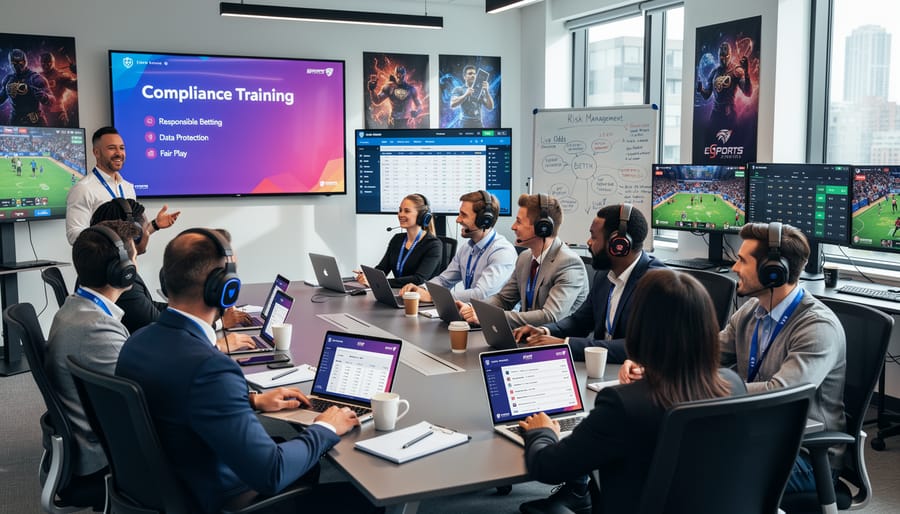
Front-Line Staff and Customer Service Teams
Front-line staff members who directly engage with bettors require specialized training that goes beyond basic compliance knowledge. These employees serve as the first line of defense in maintaining regulatory standards while delivering quality customer experiences in Brazil’s emerging esports betting market.
Training programs should prioritize three critical competencies. First, staff must master age verification procedures, including document authentication techniques and digital identity verification protocols mandated by Brazilian authorities. Interactive simulations that present various identification scenarios help employees develop confidence in making real-time decisions about customer eligibility.
Second, recognizing problem gambling indicators is essential. Training modules should include behavioral pattern recognition, such as identifying excessive betting frequency, emotional distress signals, and requests to bypass account limits. Staff need clear escalation protocols and scripted interventions that balance empathy with regulatory obligations. Real-world case studies demonstrate how early intervention protects both customers and operators from compliance violations.
Third, dispute resolution training ensures staff can navigate customer complaints within legal frameworks. This includes understanding betting rules specific to esports titles, transaction documentation requirements, and when to escalate issues to compliance officers. Role-playing exercises prepare teams for high-pressure situations while maintaining regulatory adherence. Regular refresher training keeps skills current as regulations evolve in this dynamic market.
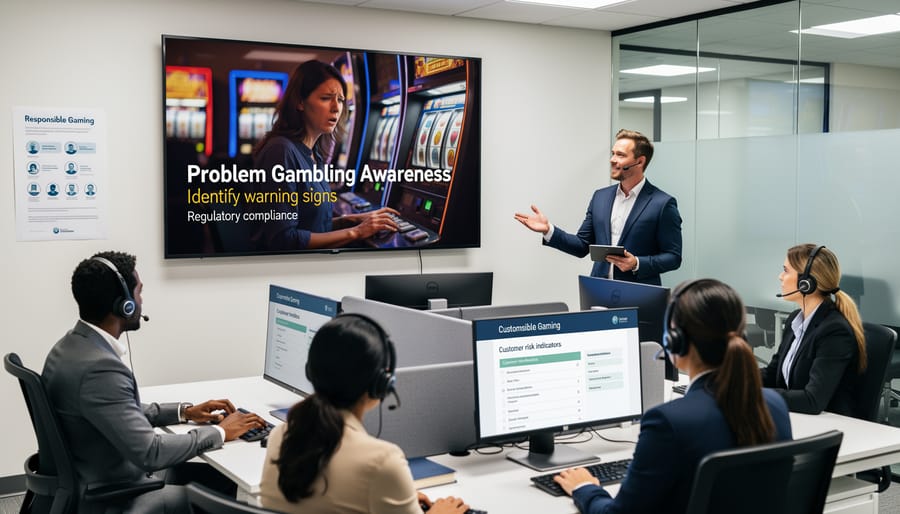
Marketing and Affiliate Management Personnel
Marketing and affiliate management teams require specialized compliance training to navigate Brazil’s stringent advertising regulations for eSports betting. The primary challenge lies in reaching gaming audiences while implementing robust age-verification protocols and avoiding exposure to minors—a demographic that overlaps significantly with eSports viewership.
Training modules should address Brazil’s Consumer Defense Code requirements, which mandate transparent disclosure of betting risks and prohibit misleading claims about winning probabilities. Influencer partnerships demand particular attention, as content creators must clearly label sponsored betting content and comply with platform-specific regulations. Training should include practical scenarios covering social media advertising, live-stream sponsorships, and community engagement tactics that align with regulatory boundaries.
A critical component involves teaching teams to recognize and avoid marketing in spaces frequented by minors, such as youth-oriented gaming forums and educational eSports programs. Affiliate managers need instruction on vetting partner websites and monitoring promotional content to ensure compliance with Brazilian advertising standards. Additionally, training should cover geolocation restrictions, ensuring marketing materials only reach audiences within authorized jurisdictions.
Interactive assessments can reinforce learning by presenting real-world advertising scenarios and requiring participants to identify compliance violations. Regular refresher courses help teams adapt to evolving regulations and emerging marketing channels within Brazil’s dynamic eSports ecosystem.
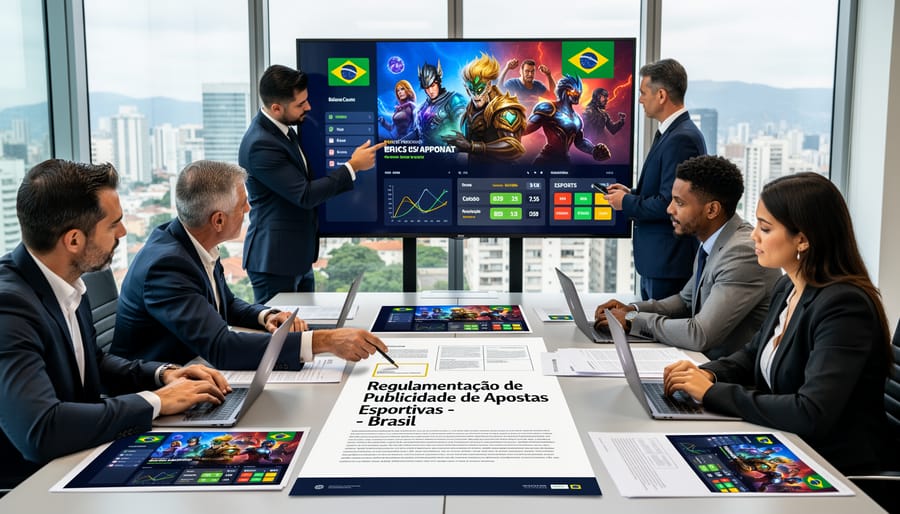
Designing Effective eSports Betting Compliance Training Programs
Essential Training Modules and Content Areas
A comprehensive eSports betting compliance training program for Brazil must address several interconnected regulatory areas to ensure operational legitimacy and workforce competency. The curriculum should begin with a foundational regulatory overview module that explains Brazil’s gambling legislation framework, including the specific provisions governing eSports betting operations, licensing requirements, and enforcement mechanisms. This establishes the legal context for all subsequent learning.
Responsible gaming modules form the ethical cornerstone of compliance training. These should cover identification of problem gambling behaviors, implementation of betting limits, self-exclusion protocols, and age verification requirements specific to Brazil’s demographic protections. Interactive scenarios help learners recognize warning signs and respond appropriately within eSports betting contexts where younger audiences may be present.
Anti-Money Laundering and Know Your Customer procedures require dedicated attention, as financial crimes pose significant risks in digital betting environments. Training must detail transaction monitoring thresholds, customer identification documentation standards under Brazilian law, suspicious activity reporting protocols, and record-keeping obligations. Real-world case studies from the eSports betting sector demonstrate how criminals exploit vulnerabilities.
Data privacy training addresses Brazil’s Lei Geral de Proteção de Dados, covering customer data collection limitations, consent mechanisms, storage security requirements, and breach notification procedures. Given eSports betting’s digital nature, this module should emphasize technical safeguards and cross-border data transfer restrictions.
Ethical marketing modules teach compliant advertising practices, including restrictions on targeting minors, truthful odds representation, and prohibited promotional tactics. Finally, scenario-based decision-making exercises contextualize all learning within realistic eSports betting situations, requiring learners to apply regulatory knowledge to resolve complex compliance dilemmas they’ll encounter operationally.
Delivery Methods: Balancing Compliance with Engagement
Effective delivery methods are essential for maintaining engagement while ensuring comprehensive understanding of Brazil’s esports betting regulations. Microlearning modules—short, focused lessons typically lasting 3-7 minutes—allow compliance training to fit naturally into busy work schedules without overwhelming learners. This approach works particularly well for complex regulatory topics that benefit from digestible segments.
Interactive scenario-based learning proves invaluable for esports betting compliance. Present employees with realistic situations, such as identifying suspicious betting patterns or responding to underage user attempts, requiring them to make decisions and see consequences. This practical application reinforces theoretical knowledge and builds critical thinking skills essential for real-world compliance challenges.
Gamification elements strategically incorporated into training can increase completion rates without trivializing serious compliance content. Consider implementing point systems for module completion, leaderboards for team performance, or achievement badges for mastering specific regulatory areas. These mechanics tap into intrinsic motivation while maintaining professional standards.
Mobile accessibility is non-negotiable in Brazil’s mobile-first market. Ensure all training content renders properly on smartphones and tablets, enabling employees to access materials during commutes or between shifts. Responsive design and offline capabilities further enhance accessibility.
Deploy periodic refresher courses quarterly or whenever regulations update. Brief review sessions help maintain compliance awareness and reach online learners with critical updates. Automated reminders and completion tracking through your learning management system ensure consistent participation across all employee levels, creating a culture of ongoing compliance rather than one-time checkbox training.
Technology Solutions for Compliance Training Management
Tracking and Documentation Requirements
Effective compliance training in Brazil’s esports betting sector requires robust documentation systems that withstand regulatory scrutiny. Organizations must maintain comprehensive audit trails capturing every aspect of employee training participation, from initial enrollment through completion. Modern learning management systems should automatically generate timestamped records documenting when employees accessed materials, how long they engaged with content, and their progression through mandatory modules.
Completion certificates must include specific data points: employee identification, training program title, completion date, version number of materials completed, and assessment scores achieved. Brazilian regulatory authorities expect organizations to produce these records immediately upon request during inspections or license renewal processes. Store certificates securely with access controls that prevent unauthorized modifications while allowing quick retrieval.
Assessment documentation deserves particular attention. Maintain detailed records showing question-by-question performance, passing thresholds, number of attempts, and remediation activities for employees who initially fail. These granular records demonstrate your commitment to genuine competency development rather than superficial compliance checkboxes.
Leverage automated education solutions to reduce administrative burden while ensuring accuracy. Configure systems to generate scheduled reports showing training compliance rates, upcoming certification expirations, and employees requiring refresher courses. Implement retention policies aligned with Brazilian regulatory requirements, typically requiring seven years of historical training records for all current and former employees involved in esports betting operations.
Real-World Implementation: Case Studies and Lessons Learned
Early-mover operators entering Brazil’s regulated eSports betting market have revealed critical patterns in compliance training implementation. International companies like Betway and Rivalry, which established operations ahead of the January 2025 regulatory deadline, invested 6-8 weeks in comprehensive training rollouts rather than rushing abbreviated programs. This timeline allowed for proper localization of content, translation accuracy verification, and cultural adaptation of scenarios to Brazilian gaming contexts.
One successful strategy emerged from a European operator that created role-specific learning paths rather than a one-size-fits-all approach. Customer service representatives received intensive training on responsible gambling protocols and age verification, while odds compilers focused on match integrity and suspicious betting patterns specific to eSports titles popular in Brazil, such as Free Fire and League of Legends. This segmentation reduced overall training time by 30 percent while improving knowledge retention scores.
Common pitfalls include underestimating language nuances. One operator faced regulatory scrutiny after their training materials used Portuguese translations that didn’t align with Brazilian legal terminology. Another mistake involves treating eSports compliance identically to traditional sports betting. The speed of eSports matches, digital-native audience behaviors, and unique fraud vectors require specialized training content.
The most effective programs incorporated simulation-based learning where employees practiced responding to real scenarios: identifying underage users attempting registration, recognizing coordinated betting patterns during tournaments, and applying cooling-off period protocols. Post-implementation data shows that operators using scenario-based assessments achieved 85 percent compliance accuracy versus 62 percent for lecture-based programs.
Training professionals should prioritize continuous learning models over one-time certification, as Brazil’s regulatory framework continues evolving. Quarterly refresher modules and regulatory update bulletins proved essential for maintaining compliance readiness among early adopters.
Staying Current: Continuous Compliance in an Evolving Market
Brazil’s esports betting landscape requires organizations to maintain dynamic compliance programs that evolve alongside regulatory changes. The Secretariat of Awards and Betting (SECAP) regularly updates licensing requirements and operational standards, making continuous training essential for long-term compliance.
Establishing a regulatory monitoring system forms the foundation of sustained compliance. Designate team members to track SECAP announcements, subscribe to official government channels, and participate in industry associations that provide regulatory updates. This proactive approach ensures your organization learns of changes before they impact operations.
Develop a structured update protocol that translates regulatory changes into training content revisions. Create a response timeline that includes impact assessment, content modification, stakeholder review, and deployment schedules. This systematic approach prevents gaps between regulation updates and workforce knowledge.
Schedule quarterly training reviews regardless of regulatory changes. This cadence allows you to incorporate lessons learned from operational experiences, address emerging compliance challenges, and reinforce critical concepts. Regular revisions also demonstrate regulatory commitment during audits and licensing renewals.
Building relationships with legal advisors specializing in Brazilian gaming law provides invaluable guidance for interpreting complex regulations. These experts can review training materials for accuracy, alert you to pending legislative changes, and clarify ambiguous requirements. Consider establishing consulting agreements that include regulatory monitoring services.
Integrate continuous compliance into broader workplace learning strategies by creating accessible knowledge repositories where employees can reference updated procedures. Implement microlearning modules for quick regulatory updates between comprehensive training cycles, ensuring teams remain informed without disrupting daily operations.
As Brazil’s eSports betting market matures under regulatory oversight, compliance training has evolved from an optional consideration to a fundamental business imperative. For L&D professionals working within or serving this sector, the message is clear: compliance training is not simply about checking legal boxes—it represents a strategic investment that directly protects your organization’s operational continuity, brand reputation, and market positioning.
The regulatory landscape demands that operators, affiliates, and platform providers demonstrate measurable competence in responsible gaming practices, anti-money laundering protocols, and consumer protection standards. Companies that treat compliance as an afterthought risk severe financial penalties, license revocation, and irreparable damage to stakeholder trust. Conversely, organizations that embed robust compliance training infrastructure position themselves as market leaders, gain competitive advantages in partnership negotiations, and build sustainable operations aligned with regulatory evolution.
The opportunity window for establishing comprehensive training frameworks is narrowing. As enforcement mechanisms strengthen and regulators increase scrutiny, reactive approaches become exponentially more costly than proactive training investments. L&D professionals have a critical role in championing these initiatives within their organizations now—before compliance failures create operational crises.
Begin by conducting gap analyses of your current training capabilities against Brazilian eSports betting requirements. Identify technology platforms that support multilingual delivery, assessment tracking, and regulatory reporting. Build cross-functional partnerships with legal, risk management, and operations teams to ensure training content reflects real-world applications. Most importantly, position compliance training not as a cost center but as essential infrastructure protecting your organization’s future in this high-growth market.